REVIEW · FUNCHAL
Funchal Agriculture Green Tour
Book on GetYourGuide →Operated by Secret Madeira Lda · Bookable on GetYourGuide
Madeira agriculture is the star here, not the scenery. I like that this small-group tour keeps you close to how the island actually works: private farm visits, a greenhouse education stop, and time with working cattle. You get hands-on learning about crops and methods, plus lunch that tastes like someone’s home kitchen. One thing to plan for: in winter, banana ripeness can be hit or miss, so don’t expect fresh-picked fruit at peak sweetness every time.
What I really enjoy is the mix of stops—banana operations, an agriculture school with grafting, a long-running cattle farm, and a rum factory with steam machines. The bonus is how practical the day feels: you’re not just looking at fields, you’re learning why farmers do things the way they do. The only drawback I’d flag is that it is a 6-hour drive-heavy day on uneven paths, so comfortable shoes matter, and it is not suitable for wheelchair users or kids under 6.
In This Review
- Key highlights worth booking for
- Why This Madeira Green Tour Works in 6 Hours
- Small-Group Pickup From Funchal and Caniço: How the Day Flows
- Banana Fields and GESBA: From Cutting to Packing
- Banana tasting is part of the deal
- Agriculture School Greenhouse and Grafting Lessons You Can Actually Use
- Why grafting matters for Madeira
- Santana Lunch in a Rural Home-Style Setting
- Porto da Cruz Rum Factory and Steam Machines Still Running
- Talho do Caniço Cattle Farm and the Requeijão Connection
- What I’d Bring, Plus the Pace and Comfort Reality
- How Much Value $100 Per Person Really Buys
- Who This Tour Suits Best (and Who Might Want Something Else)
- Should You Book the Funchal Agriculture Green Tour?
- FAQ
- Is pickup included?
- What parts of the day are guided?
- How long is the tour?
- Is the tour suitable for children?
- Is the tour wheelchair accessible?
- What is included in lunch?
- Do you taste bananas and rum?
- Should I expect ripe bananas?
- What should I bring?
Key highlights worth booking for
- Private banana field access: see the banana business on working land, not a staged stop
- GESBA banana operation tour: learn what happens after cutting, from selection to packing
- Agriculture School greenhouse grafting lessons: understand how trees are made and improved on the island
- Country lunch in a rural home-style setting: bread, tapas, choice of fish or meat, dessert, and coffee
- Porto da Cruz rum factory with steam machines: see old machinery still in use during season
- Cattle farm tied to requeijão: meet a family operation with traditional milking
Why This Madeira Green Tour Works in 6 Hours
This is a smart way to spend your time in Madeira if you care about food, farming, and how a small island keeps itself supplied. The tour is built around agriculture all day: bananas, grafted fruit trees, dairy, and then rum. Even the timing makes sense—around one big learning stop per “chapter,” then a payoff meal or tasting before you move on.
Price is about $100 per person for a full 6-hour program, and the value comes from what’s included rather than just the driving. You get hotel pickup and drop-off (Caniço and Funchal areas), farm entrances, lunch with drinks and coffee, and rum tasting. With small groups capped at 8 participants, you also tend to get more back-and-forth with the guide, especially when questions come up about how farmers work in Madeira’s terrain.
A small but important detail: the guide runs the day in Spanish, English, French, or German, so you should be able to follow closely without feeling lost. And you’ll be walking and standing at multiple stops, so plan for that instead of expecting a mostly sit-down day.
If you're still narrowing it down, here are other tours in Funchal we've reviewed.

Small-Group Pickup From Funchal and Caniço: How the Day Flows
The day starts with hotel pickup. If you’re staying in Caniço, Santa Cruz, or Funchal, the tour includes pickup and drop-off in those areas (plus Garajau is also mentioned). If you’re staying farther out—places like Ponta do Sol, Calheta, Santana, and São Vicente—you meet the guide at the main road near Hotel Madeira Panoramico parking, where parking is free.
You’ll wait in the hotel lobby about 10 minutes before pickup time. Because Madeira roads can be slower than you expect, the tour notes pick-ups can shift due to traffic or road works, and you should allow for about 15 minutes of delay. Also, pickup details can change, so check email and WhatsApp messages the day before or the morning of.
One practical tip: pack a jacket even in warmer months. The tour recommends warm clothing, and you’ll be outside at farms and at the rum factory stop.
Banana Fields and GESBA: From Cutting to Packing
Bananas are the obvious Madeira agriculture highlight, but what makes this stop interesting is that you see both ends of the system: what farmers do on their own land, and what happens when bananas go through the island’s sector management.
First, you visit a private banana field. This is not a generic viewpoint—this is working agriculture, and the point is to show how farmers look after their land. You’ll be close enough to understand the process instead of just taking photos and moving on.
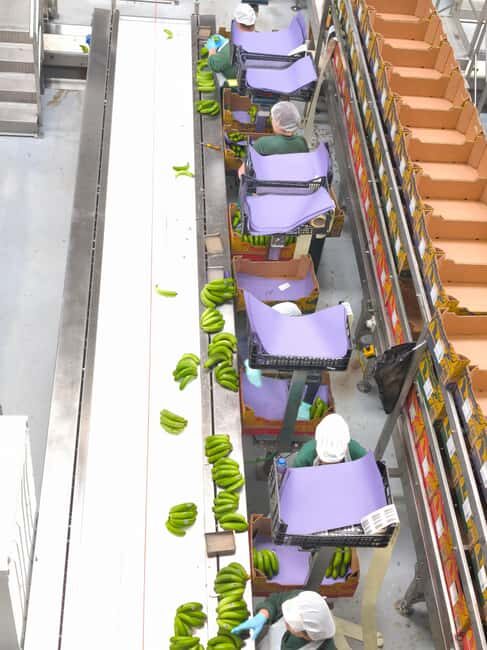
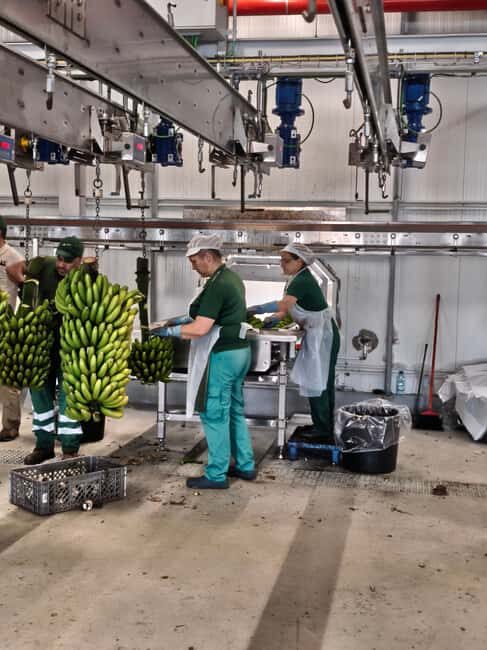
Then you tour GESBA (Empresa de Gestão do Sector da Banana), where you get a guided view of the banana business beyond the field. The tour describes what happens after bananas are picked: selection, then packing, and the practical steps that keep the supply chain moving. This kind of stop is valuable because most visitors only ever see farms from a distance. Here, you learn how the island organizes banana production after harvest.
Banana tasting is part of the deal
At the end, there’s banana tasting. One honest note: in winter, ripe bananas are not always available, so the tasting can vary. If your trip lines up with December through early spring, adjust expectations and see it as part of the learning, not a guarantee of peak sweetness.
Agriculture School Greenhouse and Grafting Lessons You Can Actually Use
After the banana chapter, you shift to an educational stop at the Agriculture School, which is a big reason this tour feels different from a standard farm walk. Here, you learn about how the island buys and plants trees—and the greenhouse angle matters.
The tour includes a guided walk around the school where you’ll see international trees planted many years ago alongside local trees, including fruit types like avocados and lemon trees. When fruit is in season, tasting is offered. This is one of those details that makes the visit feel alive; the school isn’t only about theory.
The main lesson is grafting. You’ll learn about grafting methods used on the island, which is how farmers help plants produce better results—depending on the variety, climate, and growing conditions. If you’ve ever wondered why fruit trees on one hillside thrive while another struggles, grafting is a key part of that story.

Why grafting matters for Madeira
Madeira’s farm reality comes down to small spaces, changing weather, and the need for smart growing techniques. Grafting is a practical tool farmers use to improve what can be grown and how well it grows. Even if you’re not turning into a fruit-tree nerd, you’ll walk away understanding what’s happening behind those orchards you see from the road.
Santana Lunch in a Rural Home-Style Setting
This is where the day changes pace—in a good way. The tour takes you to the northern part of the island and then serves lunch outside the city, in a cozy countryside rural restaurant setting.
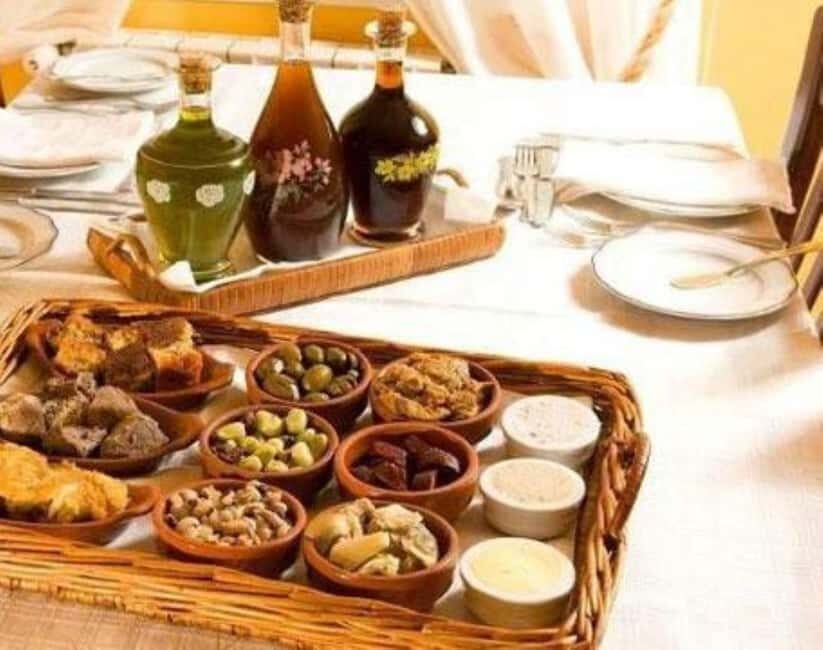
The lunch is described as prepared like locals cook at home, and you’ll notice that in the flow of the meal:
- Fresh baked home bread
- Tapas with local food
- A main meal choice of fish or meat
- Fresh vegetables
- Homemade desserts
Drinks are included, along with coffee. The time allocation is about an hour, so you get a real sit-down meal without turning it into a long lunch break that steals your afternoon.
This is also a place where you’ll likely enjoy conversation with the group and the guide, because the day is still fresh and everyone’s been through the same stops.
Porto da Cruz Rum Factory and Steam Machines Still Running
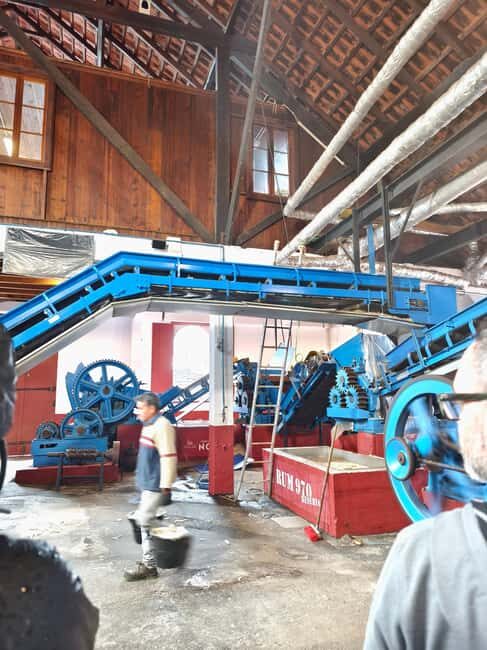
After lunch, you head to Porto da Cruz in the sugarcane region for spirits. Here’s the part many people don’t expect: the tour includes a visit to one of Madeira’s oldest rum factories, and it’s known for its steam machines still being used.
The key detail you should know is timing. During the sugarcane season—April to May—the machines are operating. Outside that season, you might still see the factory and equipment, but you shouldn’t assume the full steam power will be running at the moment you arrive.
What you do get is a short guided stop focused on the rum side, plus rum tasting as part of the tour. Even if rum isn’t your thing, it’s a fascinating look at industrial history tied directly to the island’s crops.
Talho do Caniço Cattle Farm and the Requeijão Connection
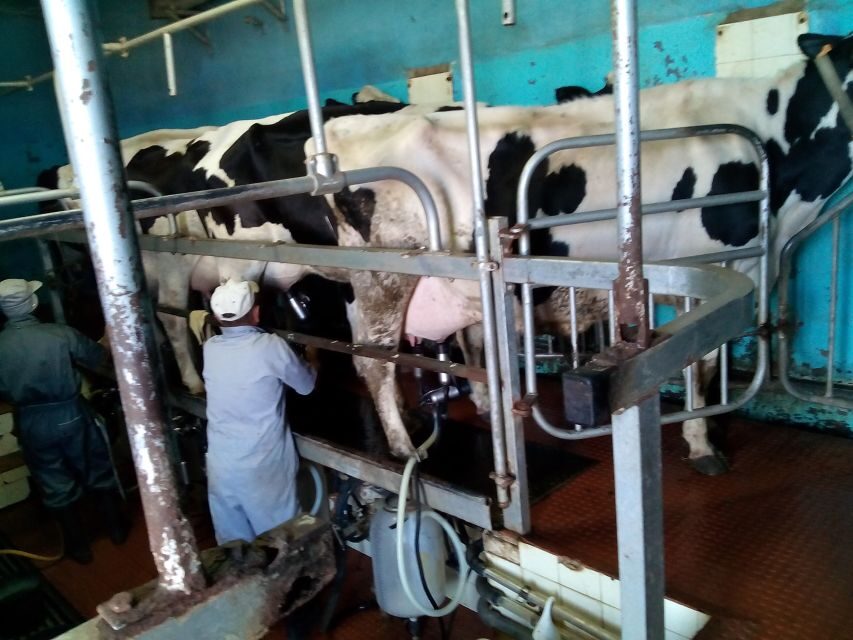
The cattle stop is one of the most grounded parts of the day. You visit a family-run cattle farm that has been in the family for over a hundred years. This isn’t presented as a museum; it’s a working operation tied to Madeira’s dairy tradition.
The tour connects the farm to Madeira’s famous requeijão cheese: the farm provides much of the milk used to make it. You’ll also see old milking techniques, which gives you a clear sense of how dairy work was done before modern upgrades took over everywhere.
You spend about 40 minutes here with a guided tour, and it’s typically the stop that feels both practical and a little surprising. It also adds balance after the crop-focused banana and fruit-tree lessons—now you see a whole different part of the island’s food system.
What I’d Bring, Plus the Pace and Comfort Reality
This tour is best treated as a field day with a few big cultural and food stops, not a spa day. Here’s what you should plan for based on the tour info:
- Comfortable shoes (you’ll stand and walk at working sites)
- Warm clothing or a jacket (especially if you get cooler air near the north)
- A realistic expectation of 6 hours that includes drives and multiple stops
The group is capped at 8 participants, and that small size is a big part of why it feels like you’re with someone who can adjust the pace. Still, you’ll follow a schedule, so don’t plan to squeeze in heavy commitments right after.
Suitability matters too:
- Not suitable for children under 6
- Not suitable for wheelchair users
Language support is solid with Spanish, English, French, and German, so pick your departure date based on guide availability and your comfort with those languages.
How Much Value $100 Per Person Really Buys
On paper, $100 might look like a lot for a “green tour.” In practice, it adds up because so many costs are folded into the day. You’re not just paying for transportation—you’re paying for access.
Included value points:
- Farm and school entrances (banana farm, agriculture school, cow farm)
- Local lunch with drinks and coffee
- Rum tasting
- Hotel pickup and drop-off in the stated areas
- A live guide for the full program
There’s also the timing advantage. In a single afternoon, you cover multiple agriculture systems: bananas, tree propagation, dairy, and rum. That’s a lot of separate experiences you’d otherwise have to stitch together with your own driving, ticketing, and planning.
If your goal is to understand Madeira beyond viewpoints, this tour is a strong use of time. If your goal is maximum downtime or a totally relaxed walking-free day, you might feel the pace.
Who This Tour Suits Best (and Who Might Want Something Else)
This fits best if you’re interested in:
- Madeira’s food production
- Getting education you can remember (like grafting and how banana systems work)
- A day that includes animals and real farm settings, not just scenic stops
- A meal that’s genuinely part of the experience, not an afterthought
It may be less ideal if you:
- Want a mostly urban or museum-style day
- Prefer short walking only (you’ll still be on your feet at multiple stops)
- Travel with accessibility needs (the tour notes wheelchair unsuitability)
- Are traveling with young kids under 6
Should You Book the Funchal Agriculture Green Tour?
I’d book this tour if you want an afternoon that explains Madeira’s food backbone—bananas, fruit trees, cattle, and rum—while keeping group size small. The biggest strengths are the mix of education and real working farms, the included home-style countryside lunch, and the fact that the day is built around people and methods, not just photo stops.
If you’re traveling in winter and banana ripeness is important to you, just temper expectations and treat the tasting as a bonus. Also, wear shoes you trust and bring a jacket. The tour’s not hard, but it is hands-on and outdoors.
If you like learning while moving, and you’d rather spend money on access than on a second generic excursion, this one is a solid choice.
FAQ
Is pickup included?
Yes, hotel pickup and drop-off are included for guests in Caniço and Funchal areas. For other areas like Ponta do Sol, Calheta, Santana, and São Vicente, you meet the guide at the main road near Hotel Madeira Panoramico parking.
What parts of the day are guided?
The tour includes guided visits at the banana sector stop (GESBA), the agriculture school area, and the cattle farm stop. The lunch stop is also part of the guided day.
How long is the tour?
The tour duration is 6 hours.
Is the tour suitable for children?
No, it is not suitable for children under 6 years old.
Is the tour wheelchair accessible?
No, it is not suitable for wheelchair users.
What is included in lunch?
Lunch includes fresh baked home bread, tapas, a main meal choice of fish or meat, fresh vegetables, homemade desserts, plus drinks and coffee.
Do you taste bananas and rum?
Yes. The tour includes banana tasting, and it also includes rum tasting.
Should I expect ripe bananas?
In winter, ripe bananas are not always available, so the banana tasting can vary.
What should I bring?
Bring comfortable shoes and warm clothing or a jacket.