REVIEW · FUNCHAL
Around The Island – Two Days Tour From 9am To 5pm (Each Day)
Book on Viator →Operated by Feeling Madeira - Tours & Walks · Bookable on Viator
Madeira looks different when someone else drives. This two-day small-group tour strings together major sights across the island, starting with hotel-area pickup in and around Funchal and ending each day back in the city by early evening. I like that you get a real mix: glass-cliff views, coast towns, banana country, levadas, and mountain lookouts—all timed so you don’t have to build a plan.
What I really like is the guide-led focus. Guides such as Lionel and Renato are known for keeping things moving, explaining the why behind the places, and working the group with humor instead of lectures. You also get useful “just show up” logistics: mobile ticket, a tight group (up to 16), and an itinerary that covers a lot of ground without feeling like cattle herding.
One consideration: Madeira roads are twisty. If you’re prone to motion sickness, this can matter—one account described a tricky situation when someone felt ill and there weren’t small-bag options to help in the moment. If you’re even a little carsick, plan for it early (seat choice helps).
In This Review
- Around The Island: What Makes This Two-Day Tour Feel Worth It
- Key Highlights You’ll Actually Remember
- Price and What You’re Getting for $72.56
- Pickup, Timing, and the Reality of Day Trips
- Day 1: Cabo Girão, Porto Moniz Pools, and Ocean Villages
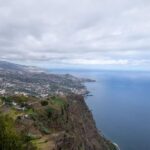
- Cabo Girão: 580m Up on a Glass Balcony
- Ribeira Brava: A 15th-Century Church Stop
- Madalena do Mar: Banana Country Without the Detour
- Fonte do Bispo (Paúl de Serra): Start of Levadas and Laurel-Forest Walks
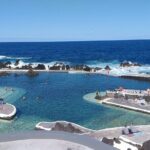
- Porto Moniz: Lunch Time in the Natural Volcanic Pools
- Seixal Viewpoint: Véu de Noiva Waterfall Views
- São Vicente: A 17th-Century Church in a Picturesque Village
- Câmara de Lobos: The Fishing Village Connection
- Day 2: Cristo Rei, Ponta de São Lourenço, Santana, and Pico do Arieiro
- Cristo Rei in Garajau: A Monument Over the East Coast
- Machico: Madeira’s First Capital Feel
- Ponta de São Lourenço: The Island’s Rugged Edge
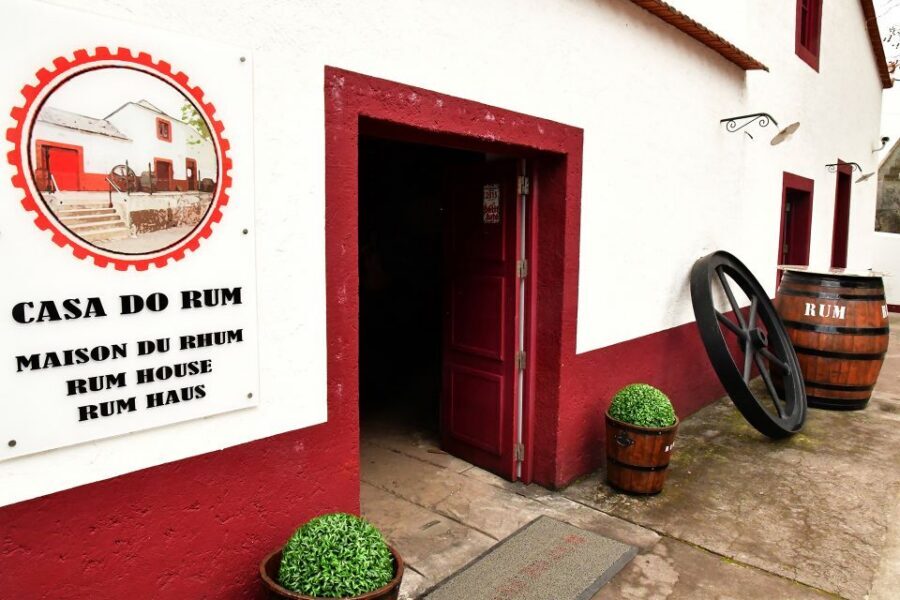
- Porto da Cruz: Rum and Old Steam-Era Machinery
- Santana: Triangular Thatched Houses and Time to Linger
- Ribeiro Frio: A Valley Pause With Trout Pools and Trails
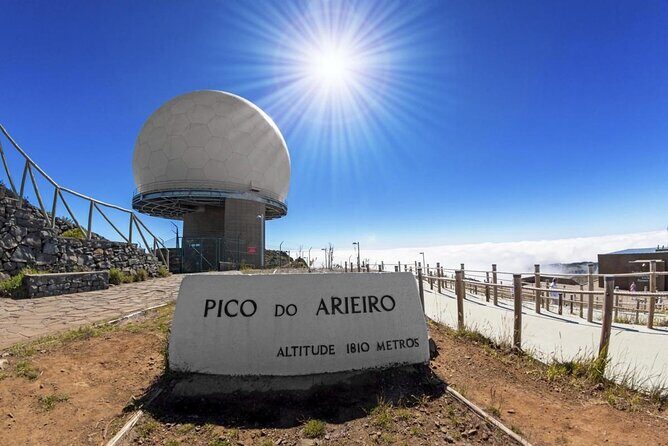
- Pico do Arieiro: 1818m Views and Poço da Neve
- How to Handle Motion Sickness on Madeira’s Winding Roads
- Packing Tips That Make This Tour Easier
- Who This Tour Suits (and Who Might Want a Different Plan)
- Should You Book Around The Island?
Around The Island: What Makes This Two-Day Tour Feel Worth It
This is a classic Madeira solution: do the driving once, then spend the rest of the day seeing places you’d otherwise connect with a car rental and hours of map work.
You’re out from 9:00am to 5:00pm each day, and the route hits both coasts. Day 1 leans west and north (cliffs, volcano pools, and ocean villages). Day 2 pushes east and inland (Miradouro viewpoints, Santana houses, a natural park valley, then high mountain views).
The best value here is not just the number of stops. It’s the structure. You get short, intentional stops for photos and quick walks, plus real windows of free time at places like Porto Moniz and Santana, where you can linger without feeling guilty about the bus schedule.
Key Highlights You’ll Actually Remember
- Up to 16 people per tour: more time to ask questions than on bigger buses.
- Cabo Girão glass balcony (580m up): a serious “whoa” viewpoint early on Day 1.
- Porto Moniz natural volcanic pools: the kind of stop where you might want a swimsuit if weather cooperates.
- Ponta de São Lourenço rock formations: a different Madeira look, more rugged and exposed to the Atlantic.
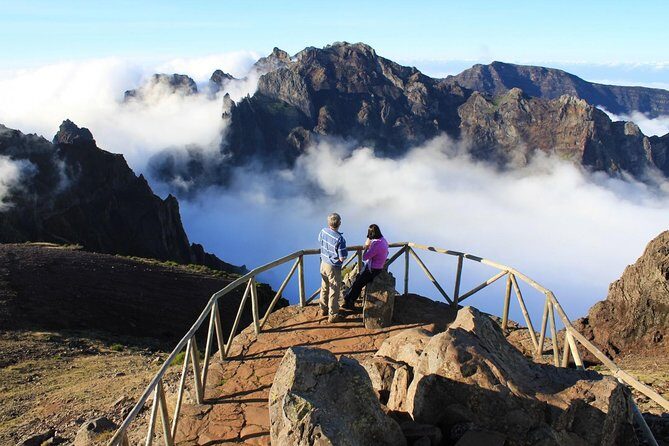
- Pico do Arieiro (1818m): mountain views that can go from clear to cloud-wrapped fast.
Other full-island Madeira tours in Funchal
Price and What You’re Getting for $72.56
At $72.56 per person for two full days (9–5 each day), the cost works when you compare it to the time, fuel, parking headaches, and stress of driving Madeira’s narrow switchbacks yourself. This is especially true if you’re staying in Funchal or the nearby hotel areas covered by pickup.
You’re also not paying for a pile of museum tickets. Most stops list free admission (church visits, viewpoints, village strolls), with Cabo Girão explicitly marked as ticketed (and not included). That makes the “real” cost easier to predict: you’ll likely budget only for that one paid viewpoint, plus any personal extras like snacks or a casual lunch.
For value, the biggest win is that the itinerary hits multiple “Madeira types” in just two days: coastal towns, high viewpoints, and inland nature trails near the laurel forest areas. You come away with the island’s shape and variety, not just a set of photos.
Pickup, Timing, and the Reality of Day Trips
Pickup is offered from Funchal city centre and the main tourist area, and there’s pickup from hotels in Caniço de Baixo and Garajau if you’re at least two people. If your place is outside those zones, you’ll be routed to the nearest meeting point in Funchal.
The order of stops can change (weather and road flow happen), so don’t lock your expectations to one exact minute. The tour does keep the pacing: you’re consistently getting 20–30 minutes at most viewpoints and village stops, plus longer free-time blocks at the two lunch-style stops.
The max group size (16) is a quiet detail that pays off. On Madeira, where you sometimes need to get in and out of the van quickly, that smaller cap helps the whole day feel smoother.
Day 1: Cabo Girão, Porto Moniz Pools, and Ocean Villages
Day 1 starts with one of Madeira’s most dramatic “start strong” moments.
Cabo Girão: 580m Up on a Glass Balcony
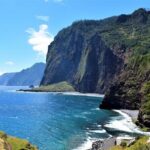
You’ll head to Cabo Girão, a cliff viewpoint at 580 meters high with a glass balcony. It’s famous for its drop-off views—on a clear day, the Atlantic looks almost too big to be real. The stop is about 30 minutes, so it’s enough time to look, take photos, and walk the viewpoint edges.
Plan for one thing: admission isn’t included here. If you hate surprises, check how you’ll handle that paid entry before you leave.
A few more Funchal tours and experiences worth a look
Ribeira Brava: A 15th-Century Church Stop
Next comes Ribeira Brava, where you can visit a church dating back to the 15th century. This isn’t a huge “tourist attraction” in the modern sense; it’s more about feeling the island’s older layers—stone, faith, village life—while still being near the coast.
You get around 30 minutes, which is long enough for a quick look inside and a short stroll.
Madalena do Mar: Banana Country Without the Detour
Then it’s Madalena do Mar, with a short walk through lush banana plantations. This stop is only 25 minutes, so don’t expect a long farm tour. But it does give you a key Madeira contrast: the island isn’t just cliffs and clouds. It’s also cultivated slopes.
Fonte do Bispo (Paúl de Serra): Start of Levadas and Laurel-Forest Walks
At altitude (between about 1300–1500 meters), you’ll reach Paúl de Serra and the Fonte do Bispo viewpoint. This area is tied to the network of levadas—the irrigation channels that also became walking routes—and it’s described with the Laurissilva forest in mind.
You’re there for about 20 minutes, so this is a viewpoint and orientation stop. Still, it sets up the “Madeira isn’t one thing” story: coast, then mountain, then the green middle.
Porto Moniz: Lunch Time in the Natural Volcanic Pools
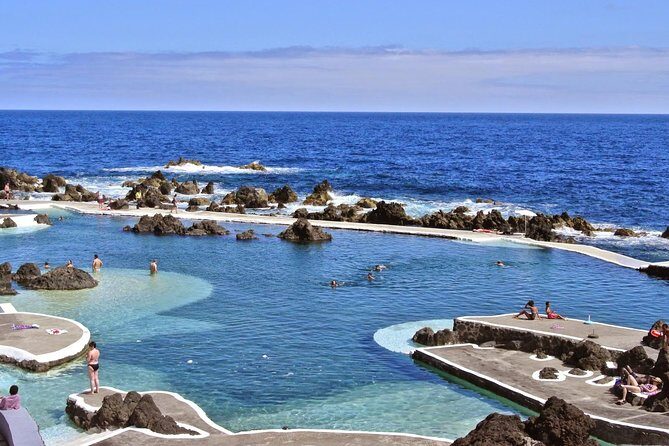
Porto Moniz is the big Day 1 break. You get 1.5 to 2 hours for lunch and free time, with a chance to see the famous largest natural volcanic pools in Madeira.
The practical advice: if you want to swim, come prepared. The itinerary notes that it can be possible in good weather. Even if you don’t swim, the pools are a great “shape of the island” moment—volcanic rock carving out these basins for the sea.
Seixal Viewpoint: Véu de Noiva Waterfall Views
Then you’ll stop at Miradouro do Véu da Noiva in Seixal. You’re meant to watch water running down the mountain, with the rock face shaped over millions of years—basically: the waterfall is the star, and the geology is the supporting actor.
This is about 20 minutes, so treat it like a quick photo stop plus a slow look.
São Vicente: A 17th-Century Church in a Picturesque Village
You’ll reach São Vicente for about 30 minutes, including time to visit a church dating from the 17th century. This is another “small place, real Madeira” stop—less about landmark scale, more about how the villages sit in the terrain.
Câmara de Lobos: The Fishing Village Connection
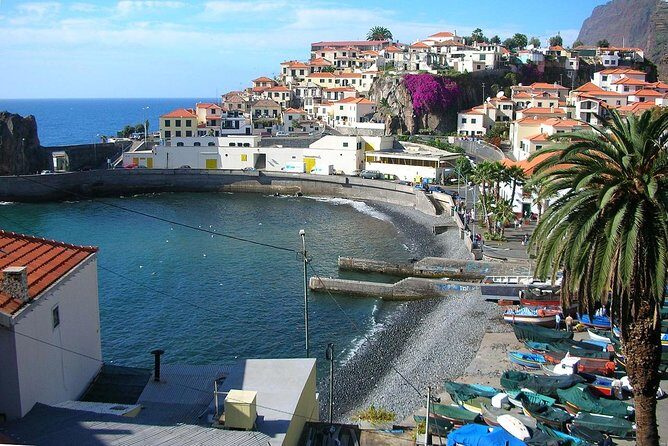
Finally, you end at Câmara de Lobos, a famous fishing village about 5 km from Funchal. It’s linked to Winston Churchill as one of his painting spots, which gives the place a little extra charm beyond the obvious sea views.
You get about 30 minutes, enough time to wander and grab a late-day snack if you want.
Day 2: Cristo Rei, Ponta de São Lourenço, Santana, and Pico do Arieiro
Day 2 is more eastern and inland—less “volcanic pools,” more “rocky Atlantic and mountain drama.”
Cristo Rei in Garajau: A Monument Over the East Coast
The first stop is Cristo Rei in Garajau. You’ll spend about 30 minutes here, with the goal of taking in the monument’s emblematic landscape setting on the east coast. It’s an easy first stop on Day 2 because you can see a lot without needing to walk much.
Machico: Madeira’s First Capital Feel
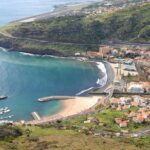
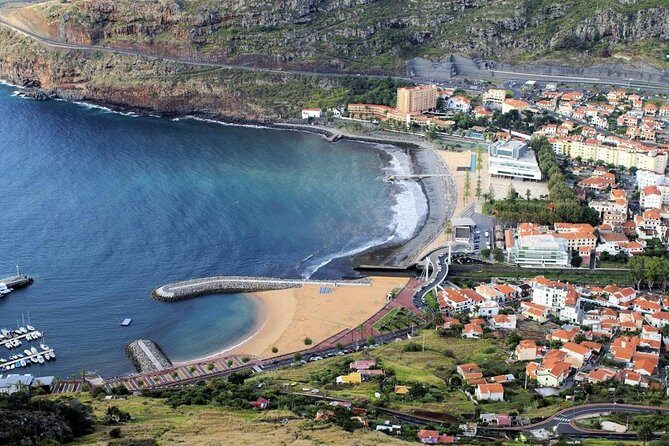
Next is Machico, about 20 minutes. It’s described as the second most populous city on the island and the first capital between 1440 and 1496. It’s also connected to early settlement in 1420, with Funchal becoming capital in 1508.
This stop works best if you like history in plain form: you’re not in a museum; you’re looking at a place that shaped Madeira’s timeline.
Ponta de São Lourenço: The Island’s Rugged Edge
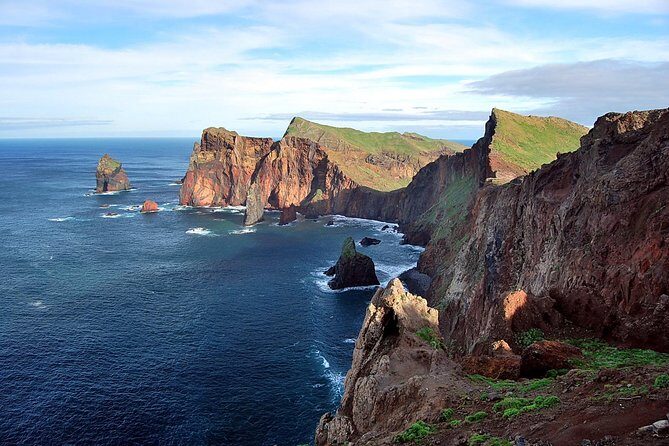
Then comes Ponta de São Lourenço (Ponta do Rosto) for about 30 minutes. This is a nature reserve with panoramic Atlantic views and dramatic rock formations, and it’s noted as being very different from the rest of the island.
Treat this like a “different Madeira” test drive. If you want variety, this stop delivers.
Porto da Cruz: Rum and Old Steam-Era Machinery
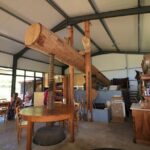
At Porto da Cruz you’ll visit an area connected to rum production, with an old distillery showing the importance of sugar cane for Madeira. The description mentions workers keeping equipment operational and that visitors can enter freely at the site recently opened for doors-on viewing.
Stop time is about 30 minutes, so think of it as a quick peek into the island’s industrial past—not a long factory tour.
Santana: Triangular Thatched Houses and Time to Linger
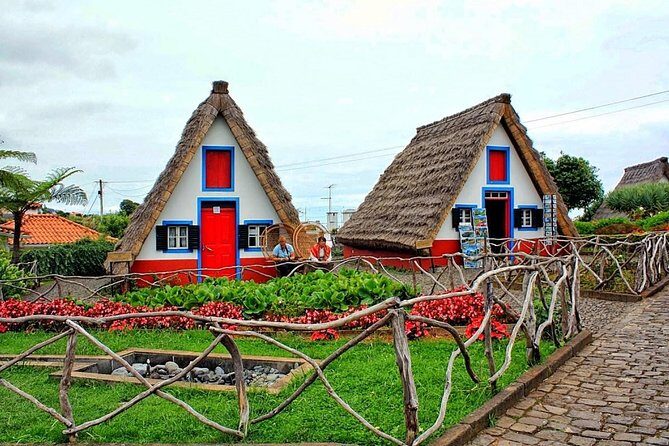
Santana gets a longer stop: about 1.5 to 2 hours, including lunch or free time. It’s known for colorful triangular thatched houses with origins traced back to the 16th century.
This is a good place to slow down. If you like taking your time in villages—coffee, photos, short walking loops—Santana is where you do that.
Ribeiro Frio: A Valley Pause With Trout Pools and Trails
Next is Ribeiro Frio, about 30 minutes. This is a natural park in a deep valley, known for trout farming pools and easy nature trails. Birdlife is part of the pitch too: laurel trees and endemic birds like pigeon, chaffinch, and the bis-bis.
This stop is ideal if you want a break from viewpoint-only pacing. You get a chance to see how the valley holds life.
Pico do Arieiro: 1818m Views and Poço da Neve
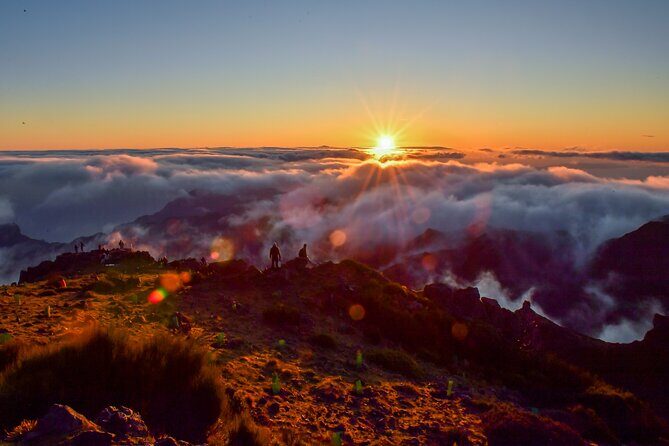
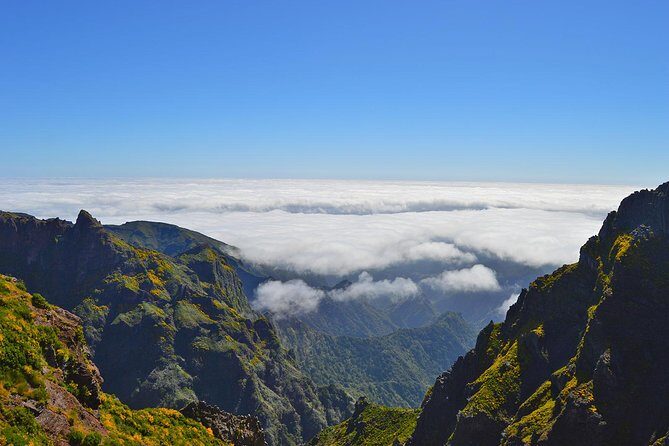
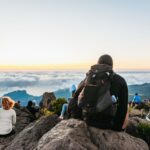
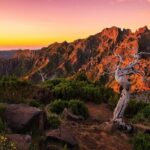
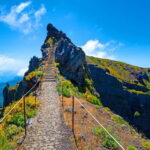
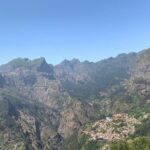
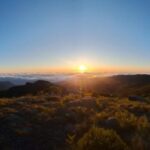
The final stop is Pico do Arieiro at 1818 meters, described as the third-highest peak on Madeira. The views can be spectacular, with clouds often hanging over the rock formations. The stop is about 30 minutes, and the itinerary notes visibility can reach the south coast, Curral das Freiras, and even Porto Santo on clear days.
On the way, you’ll also see Poço da Neve, a stone well built by an English family to store ice, snow, and hail from the mountains. It’s compared to an igloo in form.
This is where weather matters most. If clouds roll in, you still get the experience of being in the mountain world, just without the distant panorama.
How to Handle Motion Sickness on Madeira’s Winding Roads
If you get carsick, don’t tough it out. Do two things:
1) Ask yourself where you’ll sit. Many people feel better in the front.
2) Pack for quick coping. Keep your routine simple and calm.
One review account flagged a real problem: no small-bag setup if someone needs it. That doesn’t mean it will happen to you, but it is a strong hint to be prepared early—especially if you didn’t eat much or you’re already sensitive.
Also, if you wear layers, you’ll feel steadier. Mountain air changes fast. Cold and nausea can tag-team each other.
Packing Tips That Make This Tour Easier
Here’s what helps most on this kind of schedule.
- Extra layers for the higher stops (things can cool down fast near the peaks).
- A swimsuit if the weather looks good and you want to take a chance in the Porto Moniz pools.
- Binoculars if you like scanning the cliffs and rock formations for detail.
- Wear shoes that handle quick viewpoint walks and uneven paths around churches and village edges.
And one more practical thought: keep bags light. There’s at least one report of limited options for small personal items, which can be annoying if you travel heavy.
Who This Tour Suits (and Who Might Want a Different Plan)
This fits you if:
- you want east and west Madeira in two days without renting a car
- you like short guided stops with built-in free time
- you care about history and culture, not just photos
It may not be perfect if:
- you hate group travel or want a slow, flexible day-by-day rhythm
- you’re very sensitive to motion on twisty roads
- you’ve been hoping for a specific natural area not included here (Fanal Forest is one example that some people expect but this route does not feature)
The tour is also ideal for solo travelers who don’t want to drive and prefer a guide to point out what matters.
Should You Book Around The Island?
I’d book it if you want a strong snapshot of Madeira with pickup, a small group, and guides who bring places to life through stories and humor—especially if you’re short on time and don’t want to plan driving routes.
If you’re on the fence, decide based on two things: motion sickness risk and weather tolerance. When clouds sit on the peaks, you lose some distant views. But you still get the mountain feeling, plus the island’s mix of coasts and villages.
If you’re prepared—seat-smart, layers-on, and light-bag ready—this is a solid way to see a lot of Madeira for one predictable price.