REVIEW · FUNCHAL
Old Funchal Walking Tour
Book on Viator →Operated by Madeiran Heritage · Bookable on Viator
Old Funchal can feel hilly and tangled. This 2-hour walking tour helps you orient fast while hitting the big historic landmarks in a small group.
I especially like the mix of places: serious history at the Jesuit College and Funchal Cathedral, then everyday life at the Mercado dos Lavradores. I also like that you can pick a start time that fits your day, and the route stays social and manageable with a small max group size.
One thing to consider: the meeting point can be confusing if you arrive expecting the main church entrance, so plan a quick buffer time and double-check where you’re supposed to stand.
In This Review
- Key Points Worth Noting
- Getting Oriented in Old Funchal (and Why This Route Works)
- Price and What You Actually Get for About $20
- Start at the Jesuits College: Where the Walk Begins
- Stop 1: Colegio dos Jesuitas do Funchal (16th-Century Roots)
- Stop 2: Mercado dos Lavradores (A Market You Can Read)
- Stop 3: Zona Velha and Arte de Portas Abertas (Art in the Old Streets)
- Stop 4: Assembleia Regional Da Madeira at Praça do Colombo
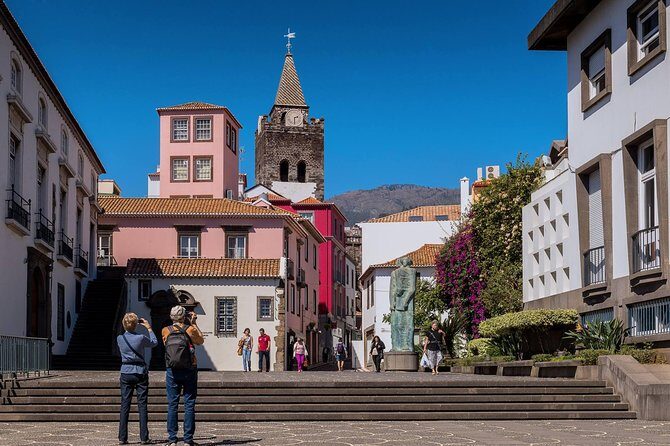
- Stop 5: Funchal Cathedral (A 16th-Century Anchor)
- Stop 6: Estatua João Gonçalves Zarco (Why Madeira Was Rediscovered)
- Stop 7: Jardim Municipal do Funchal + Wine Lodge Moment
- Stop 8: Igreja de São João Evangelista do Colégio do Funchal (Baroque Inside)
- Stop 9: Back at the College for Loja Gaudeamus Wine Tasting
- The Group Size and Guide Style: Why It Feels Personal
- Weather, Walking Comfort, and How to Prepare
- Who This Tour Is For (and Who Might Want Another Plan)
- Should You Book the Old Funchal Walking Tour?
- FAQ
- How long is the Old Funchal Walking Tour?
- How much does the tour cost?
- What language is the tour offered in?
- Where does the tour start and end?
- What’s included in the price?
- Is the wine tasting included?
- Is transportation to and from attractions included?
- What happens if the weather is bad?
Key Points Worth Noting
- Small groups (up to 10) keep it easy to move, ask questions, and stay together.
- Jesuit College + Igreja de São João Evangelista give you baroque-and-mannerist interiors without rushing.
- Mercado dos Lavradores is more than a stop; it’s where you see Madeira’s food culture and tile-work detail.
- Old Town art at Zona Velha connects history with today’s street-art project, Arte de Portas Abertas.
- A short wine tasting at the end adds a local flavor to the sightseeing loop.
Getting Oriented in Old Funchal (and Why This Route Works)
If it’s your first time in Funchal, you’re dealing with two things at once: streets that twist uphill and a dense center where you can easily miss key sights. This tour is built to solve both. You spend your time where the “why it matters” landmarks sit—rather than scattering across the island.
The pacing is also practical. You’re not doing long hikes or stretching the day with heavy logistics. Stops are short, so you keep momentum, but you still get enough time to look closely—especially at the church interiors and market details.
And since it’s guided by a driver/guide and an escort/host, you’re not left guessing. Multiple guides have been reported, including Sarah, Elena, Dulce, Pedro, and Agnes—often described as engaging and able to keep the group together even when the weather isn’t cooperating.
Other Funchal old town walks we've reviewed in Funchal

Price and What You Actually Get for About $20
At $19.83 per person for roughly 2 hours, this is priced like a value-focused introduction to the center of Funchal. The key is that several stops include admission tickets, while other stops are free to enter.
Here’s the practical way to think about it: you’re paying for (1) guidance through the historic points, (2) time saved trying to figure out what’s worth visiting, and (3) entry where entry is normally a separate cost. Even the free stops aren’t fluff, because they build context—Old Town street art and the governmental square help explain what you’re looking at.
If you’re the kind of traveler who likes to front-load information early in the trip, this price point makes sense because it helps shape what you do after. You’ll usually leave with a clearer mental map and better instincts about where to spend your free time.
Start at the Jesuits College: Where the Walk Begins
The tour begins at the Jesuits’ College of Funchal area near R. dos Ferreiros Estrada (São Martinho, Funchal). This matters because the whole route later loops back around to Jesuit-linked buildings, so starting here gives you an efficient flow instead of bouncing around town.
Do yourself a favor: don’t rely only on a pin on your phone. Some people have reported that mapping can point you to the wrong spot. In practice, the correct meeting point may be a side entrance connected to the University of Madeira rather than the main front entrance by the church doors. If you’re even slightly unsure, message or call per the instructions you receive at booking so you don’t lose time circling.
Stop 1: Colegio dos Jesuitas do Funchal (16th-Century Roots)
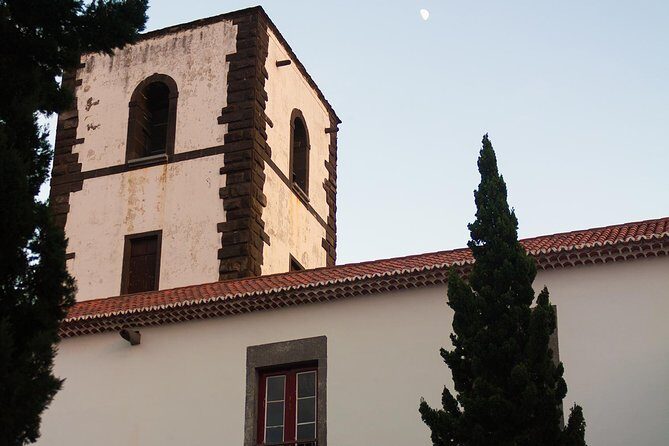
Your first historical anchor is the Colegio dos Jesuitas do Funchal, founded in the 16th century under King Sebastian of Portugal. This stop sets the tone for the entire walk: Funchal’s old center isn’t just pretty streets—it’s shaped by religious institutions that helped organize education and influence.
Why this stop is worth it: the Jesuit story gives you a framework for understanding the later sites. When you see the church connected to the college later, you’ll recognize the relationship between the buildings instead of treating each one as a random landmark.
What to watch for: since this early stop is short (about 10 minutes), you’ll want to arrive ready to look. Bring your phone for notes, but don’t get stuck photographing every surface before the guide finishes the main points.
Stop 2: Mercado dos Lavradores (A Market You Can Read)
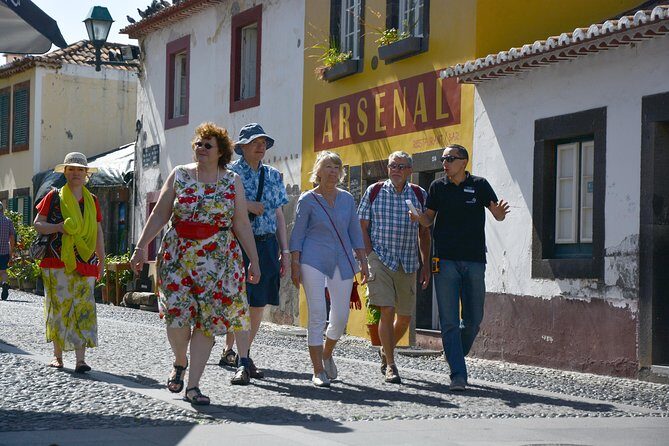
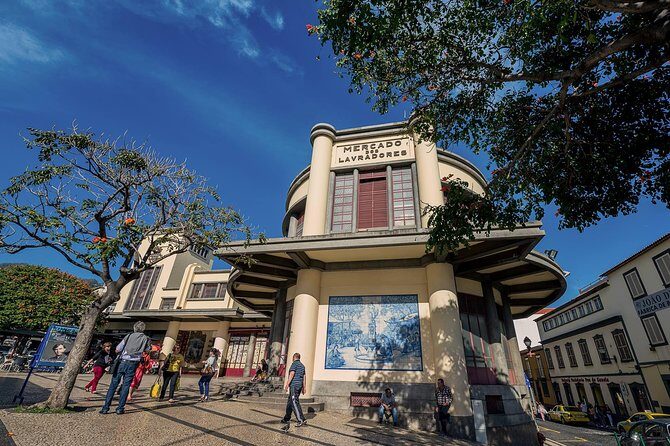
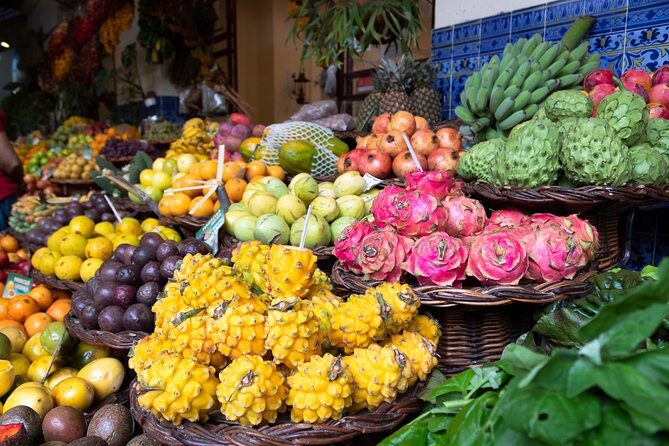
Next comes Mercado dos Lavradores, the fruit, vegetable, flower, and fish market in Funchal. It’s not just a place to snack. The building itself tells a story. It opened on 24 November 1940, and the design is credited to Edmundo Tavares, with tile panels by João Rodrigues that depict regional themes.
Even if you’re not a big market person, you’ll likely appreciate the structure of the space—divided into smaller plazas and stairways used as sales venues. It makes the market feel like a set of “mini neighborhoods” rather than one chaotic room.
One practical tip: bring a little patience for movement. Markets can be busy even outside peak hours, and it’s a stop where you’ll naturally want to slow down and look at what’s for sale.
Other walking and food tours we've reviewed in Funchal

Stop 3: Zona Velha and Arte de Portas Abertas (Art in the Old Streets)
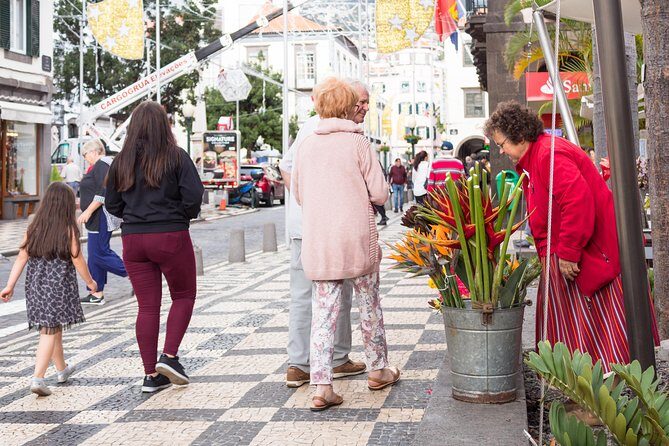
Then you’ll move into Zona Velha, where nightlife and culture show up in a very specific way: local and foreign artists transformed streets through a project called Arte de Portas Abertas.
This is a good contrast stop. After stone history and market textures, you get street-level creativity that reflects modern Funchal life. You’re also walking through the exact kind of area you’d otherwise explore randomly—so the guide helps you understand what you’re seeing and where to focus your attention.
Potential drawback: this segment is free and short, so you won’t get a guided “deep explanation” of every mural or door. If you’re chasing street art as a serious hobby, consider spending extra time here after the tour with a slower pace and your own route.
Stop 4: Assembleia Regional Da Madeira at Praça do Colombo
At Praça do Colombo, you’ll stop at Assembleia Regional Da Madeira. It’s a quick moment, around 5 minutes, but it’s useful because it shifts your gaze from old religious influence to modern civic space.
Why it helps: when you see both sides—historic institutions and today’s governing space—you get a better sense of how the city functions now. It also gives your walk variety, so it doesn’t feel like a long series of churches and facades.
Stop 5: Funchal Cathedral (A 16th-Century Anchor)
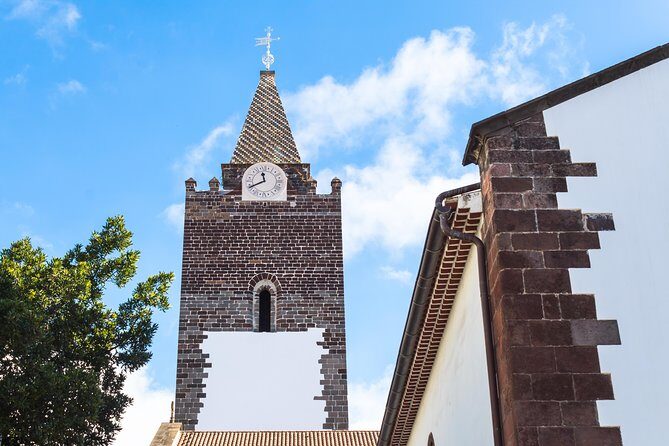
Funchal Cathedral is from the 16th century and has served as the seat of what’s described as the largest diocese in the world. You’ll spend about 10 minutes here, with admission included.
This stop is the kind of place where timing matters. If you like interiors, you’ll want to keep your attention on the church space and details the guide highlights, because you won’t have long.
If you’re not a cathedral person, you may still appreciate this one for its historical role in shaping Funchal. Even a brief look can change how you understand the old town’s layout—churches often sit near the heart of earlier street patterns.
Stop 6: Estatua João Gonçalves Zarco (Why Madeira Was Rediscovered)
Next is a statue: Estatua João Gonçalves Zarco. He’s one of the three navigators associated with the rediscovery of the island. It’s a short stop (about 5 minutes), but it gives you a storyline that connects geography to history.
Why it’s smart: Madeira’s identity is tightly tied to navigation and settlement. This point turns your sightseeing away from only buildings and toward the bigger question of why Europeans came here and what followed.
Stop 7: Jardim Municipal do Funchal + Wine Lodge Moment
You’ll get a quick visit to Jardim Municipal do Funchal. Then the tour includes a stop for a traditional Wine Lodge before continuing onward.
This part is a nice pacing tool. A garden break helps you reset your energy, and the wine stop makes the tour feel like a lived-in experience rather than only a lecture walking loop.
If you’re watching your schedule: remember you’ll still be walking to more church interiors after this. Pace yourself so you don’t get tired before the final big interior stop.
Stop 8: Igreja de São João Evangelista do Colégio do Funchal (Baroque Inside)
This is one of the highlights: Igreja de São João Evangelista do Colégio do Funchal. The focus here is the interiors, noted for Madeira’s finest baroque and mannerist art pieces. Admission is included, and the time is around 10 minutes.
Why this stop gets strong marks: church interiors are the kind of thing you can only appreciate if you know where to look. A good guide points out what matters—art style details, how the space is composed, and why this church is considered a must-see.
Practical note: if you’re traveling with anyone who wants lots of slow photo time, set expectations. This stop is short on purpose, because it keeps the overall walk near the 2-hour mark.
Stop 9: Back at the College for Loja Gaudeamus Wine Tasting
To wrap, you return to the Colegio dos Jesuitas do Funchal area for Loja Gaudeamus, including a wine tasting.
This works well because it closes the loop. You started with the Jesuit college, worked through the historic core, and finish again where the tour is centered. Plus, wine tasting is a low-pressure way to slow down at the end without turning the tour into a long event.
What you’ll likely like: it’s a local touch right when your walking energy is starting to dip. If you’re sensitive to alcohol, you can usually sip rather than treat it like a full pour—just follow the host’s lead.
The Group Size and Guide Style: Why It Feels Personal
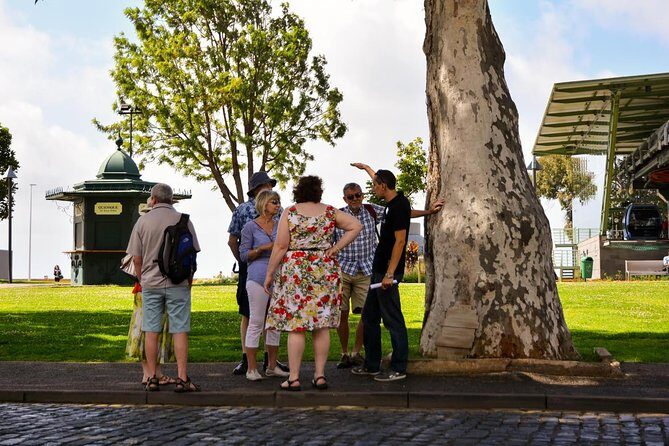
This tour caps at a maximum of 10 travelers. That small size is a big deal in Funchal’s old center. It makes it easier to stop where the best viewpoints and entrances are, and it’s easier for the guide to manage the group on uneven streets.
Guide style also varies by person, and that’s reflected in the range of experiences. Some guides are student-aged and may be living on the island only part-time, so you may want to ask a few “why” questions if you want deeper historical detail. On the other hand, many guides bring real enthusiasm and practical city tips that go beyond monuments.
If you appreciate humor and stories mixed in with the facts, names like Sarah and Elena have been singled out for that kind of tour energy. If you want calm, careful pacing, Dulce and Agnes have been described as relaxed and easygoing. And if you want a guide who warns you about scams and tourist traps, keep an ear open because at least one guide specifically gave that kind of advice for the old city.
Weather, Walking Comfort, and How to Prepare
This experience is described as requiring good weather. That’s sensible because it’s a walking route through outdoor areas like Zona Velha and the market. If rain is in the forecast, consider packing a light rain layer and shoes with decent grip.
In terms of effort, most travelers can participate, and the route is usually described as a comfortable distance around a hilly city. Still, plan for uneven pavement and stairs or sloped sidewalks that come with Funchal’s topography.
If you get motion sick easily, keep your plan simple. Don’t schedule a second long walking activity right after the tour. Let this be your “first exploration” and save the more intense hikes for later.
Who This Tour Is For (and Who Might Want Another Plan)
This is a strong fit for:
- First-time visitors who want a clear map of the old town
- History lovers who like their history connected to specific sites
- People who want an efficient 2-hour option rather than a half-day commitment
- Travelers who value guided context at churches and civic buildings
You might want a different plan if:
- You want a deep, slow-study history seminar (this is more “see and understand fast”)
- You need long stops for galleries or you hate brief admissions-style visits
- You’re allergic to crowds—even though the group is small, markets and old streets can still be active
Should You Book the Old Funchal Walking Tour?
Yes, if you want a smart first-day orientation with real context. For around $20, you’re getting a tight route through the Jesuits complex, Mercado dos Lavradores, key squares, and a standout interior church, plus a wine tasting finish. It’s the kind of experience that helps your next decisions feel easier: where to linger, what to revisit, and what to skip.
Book it especially if you like being guided through a city rather than just wandering. If you’re the cautious type about logistics, double-check the meeting point details in advance and give yourself a small buffer for finding the correct side entrance near the Jesuits/University area.
If you want, tell me what day you arrive in Funchal and what you care about most—churches, food markets, or street art—and I’ll suggest what to do with the rest of your time after this tour.
FAQ
How long is the Old Funchal Walking Tour?
It runs for about 2 hours.
How much does the tour cost?
The price listed is $19.83 per person.
What language is the tour offered in?
The tour is offered in English.
Where does the tour start and end?
It starts at the Jesuits’ College of Funchal and ends back at the meeting point.
What’s included in the price?
A driver/guide and tour escort/host are included. Admission tickets are included for some stops, while other stops are free.
Is the wine tasting included?
The itinerary includes a wine tasting at Loja Gaudeamus at the end of the tour.
Is transportation to and from attractions included?
No. Transportation to and from attractions is not included.
What happens if the weather is bad?
The tour requires good weather. If canceled due to poor weather, you’ll be offered a different date or a full refund.